
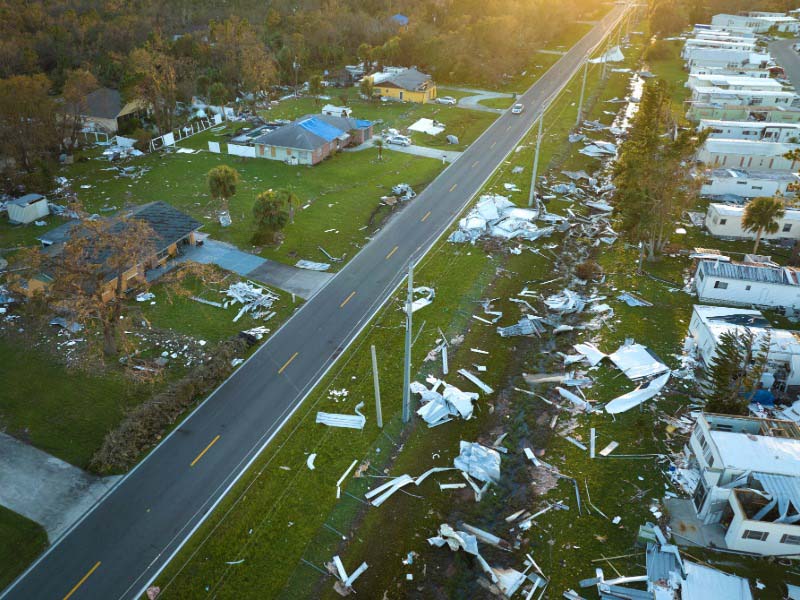
After a hurricane or severe storm hits Tallahassee, homeowners often need to make repairs quickly. During this stressful time, contractors or so-called “storm chasers” may show up offering fast solutions.
The Federal Trade Commission warns that unlicensed contractors and scammers often target communities after disasters. Some ask for money upfront and disappear. Others start a job but never finish. Cash and wire payments can be especially hard to get back.
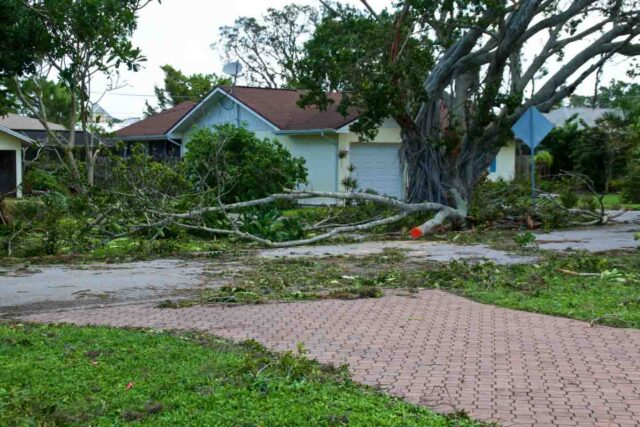 Storm scams in Tallahassee take several forms, from fake contractors and FEMA imposter scams to price gouging in Florida and fraudulent charities. Watch out for anyone who asks for cash before starting, can’t show a license or proof of insurance, or tries to rush you into signing. In Florida, unlicensed contracting during a declared emergency is a third-degree felony.
This guide covers common scams, warning signs, Florida’s legal protections, steps to take before hiring, and how to report fraud. Trustworthy local contractors provide written estimates with clear terms. Ask for both before hiring anyone.
Common Storm Scams in Tallahassee
Contractor Fraud After a Storm and Storm Chaser Scams
Unlicensed or out-of-town crews show up in damaged neighborhoods promising fast repairs. These storm chaser scams usually begin with a request for cash upfront, and then disappear or leave the work unfinished.
In Florida, unlicensed contracting is normally a misdemeanor. During a governor-declared state of emergency, however, it becomes a third-degree felony.
If you hire an unlicensed contractor in Florida and the work is abandoned, you may have little recourse. Storm-damaged or water-soaked insulation is a common repair target. Instead of hiring a door-knocking crew, choose a qualified professional with experience in insulation removal.
Price Gouging in Florida
Florida law prohibits unjustifiably excessive prices for essential commodities and services during a declared emergency. These protections remain in effect for up to 60 days unless the emergency period is extended. The state attorney or the Florida Department of Legal Affairs enforces these rules.
Get several estimates and make sure all costs are listed in writing before hiring anyone for storm repairs.
FEMA Imposter Scam
 FEMA, the Small Business Administration, and other federal agencies never charge you to apply for or receive disaster assistance. Anyone who asks for a fee to help you “qualify” for federal relief is a scammer.
According to FEMA’s disaster fraud guidance, identity thieves may use stolen names and Social Security numbers to file applications. An unexpected FEMA inspector visit is a warning sign that someone applied using your identity.
FEMA workers carry official government identification. Ask to see it before sharing any personal information or letting anyone into your home.
Tree Removal Scams After a Hurricane
University of Florida’s IFAS Extension advises homeowners to verify insurance, credentials, and costs in writing before hiring a tree care professional. Hiring an uninsured worker may leave you responsible if they get injured on your property.
Charity Fraud
Fake charities take advantage of people’s generosity after storms. Only donate to established organizations you can verify independently.
Red Flags of Post-Storm Repair Scams
The FTC lists several common warning signs. Watch out if a contractor or repair service:
- Claims a license is not required
- Pressures you to sign with a “today only” discount
- Asks you to sign over your insurance check
- Demands full payment upfront or insists on wire transfer, gift cards, payment apps, cryptocurrency, or cash
- Presents a contract with blank spaces to fill in later
- Offers to secure FEMA money for a fee
- Claims to represent FEMA but has no official badge
The FTC says never sign over your insurance check. If you’re making staged payments, ask your bank about using a Certificate of Completion. This way, the bank only releases funds for each stage of the job after you approve it.
Remember this simple rule:
No license, no writing, no way.
How to Avoid Home Repair Scams in Tallahassee
How to Verify a Contractor’s License in Florida
Verify a contractor’s license through the Florida Department of Business and Professional Regulation or your county office. Ask for proof of liability insurance and workers’ compensation before work begins.
For more guidance, review these three steps to choosing the right insulation contractor in Florida.
Get Everything in Writing
Ask several contractors for written estimates. Each should include the scope of work, materials, project dates, total price, contact details, and license number. Don’t just go with the lowest bid.
The contract should include start and finish dates, payment schedule, and the three-day right to cancel for in-home signings. Never sign a contract with blank spaces.
Pay Safely
 Agree on a reasonable down payment. Never pay the full amount upfront. Pay by credit card or check and make the final payment only once the work is finished and you’re satisfied.
Contact your insurance company directly to confirm what your policy covers. Don’t rely on a contractor’s say-so about what will be reimbursed.
Once urgent repairs are finished, a professional existing home insulation evaluation can help guide rebuilding decisions.
How to Report Disaster Fraud
Report general scams to the FTC at ReportFraud.ftc.gov.
Report FEMA-related fraud to FEMA’s Investigations and Inspections Division at StopFEMAFraud@fema.dhs.gov or 866-223-0814.
For unexpected FEMA contact or inspection, call the FEMA Helpline at 800-621-3362. Report suspected identity theft at IdentityTheft.gov. Contact local law enforcement when fraud is actively taking place.
Frequently Asked Questions
Is unlicensed contracting illegal in Florida after a hurricane?
Yes. An unlicensed contractor in Florida can face a third-degree felony charge for contracting during a declared state of emergency.
What counts as price gouging in Florida?
Unjustifiably excessive prices for essential commodities, services, or lodging during a declared emergency may constitute price gouging in Florida. The law generally applies for up to 60 days unless extended.
Should I pay a contractor upfront after storm damage?
Never pay the full amount upfront. Negotiate a reasonable deposit, pay by credit card or check, and make the final payment after the work is completed satisfactorily.
How do I verify a contractor’s license in Florida?
To verify a contractor’s license in Florida, check with the Florida DBPR or the appropriate county government. Require proof of insurance before work begins.
How do I report a storm scam?
To report disaster fraud, use ReportFraud.ftc.gov for general scams, FEMA’s reporting channels for FEMA-related fraud, and local law enforcement for fraud in progress.
Stop a Storm Scam Before It Starts
Check the contractor’s license, get all agreements in writing, never pay the full amount upfront, and report anything suspicious. These steps can help you avoid hurricane repair scams in Florida, roofing scams after a storm, and other costly fraud.
Allweather Insulation has served Tallahassee, North Florida, and South Georgia since 1955. If you need licensed, local insulation services after storm damage, call (850) 942-5557 for a free written estimate.
REFERENCES (MLA 9th Edition)
Federal Emergency Management Agency. “Disaster Fraud.” FEMA.gov, U.S. Department of Homeland Security, www.fema.gov/about/offices/security/disaster-fraud.
Federal Trade Commission. “How To Avoid Scams After Weather Emergencies and Natural Disasters.” Consumer Advice, U.S. Federal Trade Commission, consumer.ftc.gov/articles/how-avoid-scams-after-weather-emergencies-and-natural-disasters.
Florida Legislature. “Chapter 489 Section 127 — Prohibitions; Penalties.” The 2025 Florida Statutes, The Florida Senate, www.flsenate.gov/Laws/Statutes/2025/0489.127.
Florida Legislature. “Chapter 501 Section 160 — Rental or Sale of Essential Commodities During a Declared State of Emergency; Prohibition Against Unconscionable Prices.” The 2025 Florida Statutes, The Florida Senate, www.flsenate.gov/Laws/Statutes/2025/0501.160.
University of Florida IFAS Extension. “Cleaning Up After a Hurricane: Get the Right Tree Care Professional.” Ask IFAS, University of Florida Institute of Food and Agricultural Sciences, ask.ifas.ufl.edu/publication/FR171.