
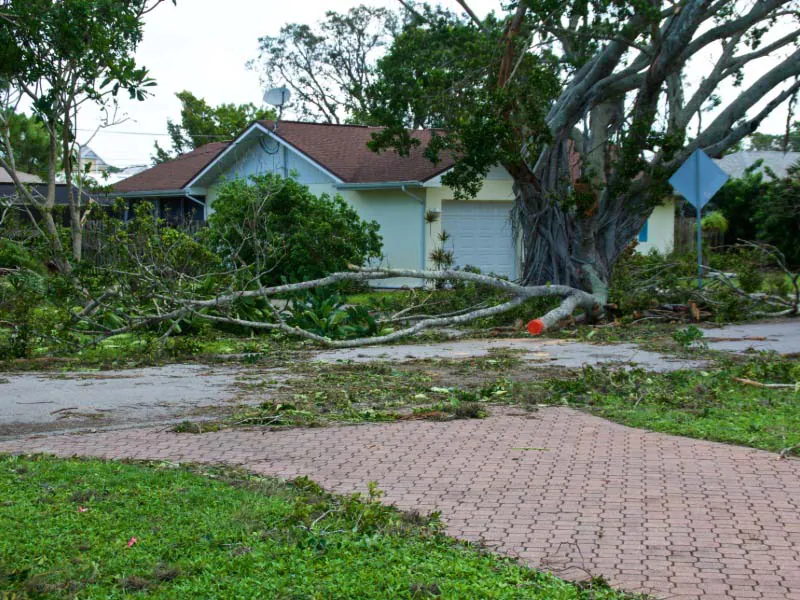
After the storm has passed and the power has come back on, a quick sweep shows the shingles are still in place and there are no brown rings on the ceilings. It feels safe to assume the attic made it through just fine.
That assumption can be costly. During a hurricane, strong winds can force water past vents and roof openings for hours. The insulation soaks it up quietly, and no stain appears below until the material is saturated and mold has started. This hidden wind-driven rain attic damage is common in North Florida homes.
The fix is a deliberate walkthrough once hurricane season winds down. A November attic inspection looks for staining, matted insulation, and musty odors. What you find tells you whether your insulation can dry in place or needs to come out.
Insulation that stays wet longer than about 24 to 48 hours should generally be removed and replaced, based on guidance from the Environmental Protection Agency (EPA) and Federal Emergency Management Agency (FEMA). The same goes for insulation that looks compressed or stained or smells musty. If you notice any of these signs, schedule a professional attic evaluation.
Why Wind-Driven Rain Gets into North Florida Attics
A roof is built for a normal rainstorm, where rain falls straight down. Hurricanes rarely deliver rain that way. Instead, their high winds push rain sideways and even upward, forcing water past roof coverings, overhangs, and vents that would usually stay dry in an ordinary storm.
Roof vents and turbines are especially vulnerable because they are often poorly attached. This lets them bend or come loose in hurricane winds. Many ridge vent leaks start this way, with a cap that lifts just enough to let water blow in.
 Soffit vents are another trouble spot because no reliable test method currently exists to keep wind-driven rain out of them. That makes soffit vent water intrusion a repeat problem.
Flashing matters too. Damaged or gapped flashing around chimneys and skylights increases the risk of water intrusion, along with the mold growth that often follows. This is why FEMA recommends inspecting your roof at least twice a year, in spring and fall, plus after any high-wind event.
Leon County sits in IECC Climate Zone 2A, a hot-humid designation confirmed in the Florida Building Code. Wet insulation dries fairly quickly in a dry climate, but our climate’s humid air slows evaporation and lets dampness linger much longer.
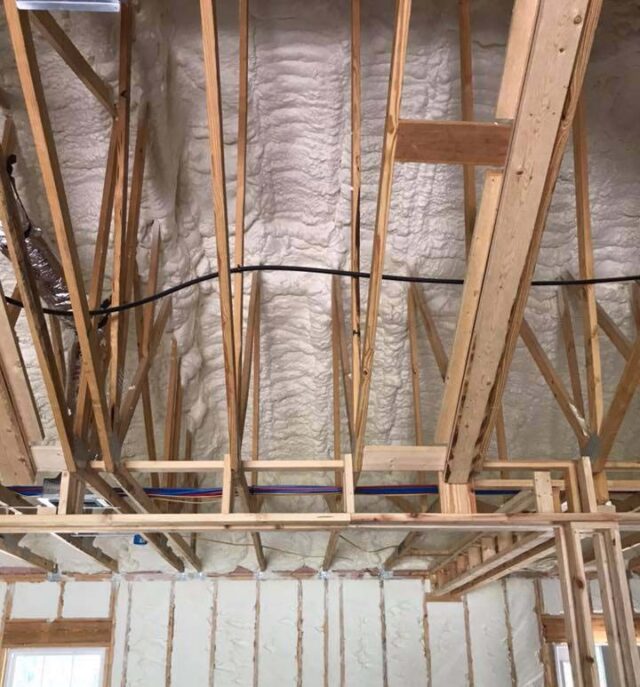
When homeowners rebuild after removal, some choose spray foam insulation as an air-sealed assembly option for the attic. Keep in mind that no insulation can make a roof windproof.
The November Attic Checklist — Signs of Wind-Driven Rain and Wet Insulation
Hurricane season ends November 30, so November is an ideal time for a post-season walkthrough. Before you climb up and handle any suspect materials that may hold mold, put on gloves and a mask and ventilate the space.
What a post-season walkthrough should cover:
- Look for staining. Dark spots or discoloration on attic sheathing or rafters is a direct sign of water intrusion.
- Check the texture of the insulation. Matted or flattened fiberglass or cellulose has lost the loft that traps air, a clear sign it got wet and stayed wet.
- Trust your nose. A musty smell in the attic or upper-floor rooms often means mold is already active in insulation or framing.
- Follow the streaks. Dark lines running down rafters or trusses toward the attic floor show water is moving in from a roof or vent failure.
- Inspect the outside too. Look at ridge vents and soffit screens along with turbines and flashing. Exterior damage and attic wetness are often directly linked after named storms.
Catching attic mold after hurricane season early makes it easier to manage. The goal is to control the moisture source and remediate any growth.
Dry-In-Place or Remove and Replace? The Attic Insulation Decision
Knowing when to replace wet insulation comes down to two questions. How long did it stay wet, and what shape is it in now?
The EPA notes that porous materials left wet longer than about 24 to 48 hours carry a much higher risk of mold. FEMA goes further and tells homeowners to remove all wet insulation. It is recommended that wet insulation inside HVAC ducts be replaced because it cannot be cleaned well. The same reasoning applies to saturated attic insulation.
When Drying in Place May Work
Drying in place only makes sense when:
- The wetting is small and caught fast.
- You find only a few damp spots of fiberglass within a day or two that may recover once the leak is fixed.
- A professional moisture check confirms the area is truly dry.
When Removal Is the Right Call
Removal is the safer choice when:
- Insulation stayed wet past the 24-to-48-hour window.
- You see matting or stains or notice a musty smell.
Loose-fill and cellulose that compact when wet do not regain their loft, which makes the attic insulation R-value loss permanent.
 That loss shows up on your bills. ENERGY STAR estimates that homeowners can save an average of 15% on heating and cooling costs through air sealing and added insulation in areas like the attic. Damaged insulation slowly gives those savings back.
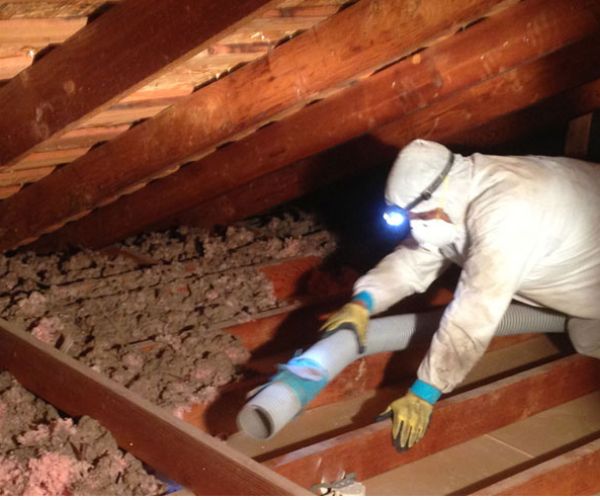
If mold covers more than about 10 square feet, homeowners should hire a trained professional instead of a DIY approach. Professional insulation removal contains contaminated material as it comes out, so spores stay out of your living space. When comparing insulation removal Tallahassee options, ask how the crew seals off the attic during the work.
Once the attic is clean and dry, the next step is replacement. Upgrading your existing residential home insulation brings back the comfort and efficiency the storm took away.
Frequently Asked Questions
How can you tell if attic insulation got wet after a storm?
Look for staining on the sheathing or drywall and for insulation that looks matted or flattened. A musty odor or dark streaks on rafters are also strong clues.
Can wet attic insulation dry out on its own?
It depends on the material and how long it stays wet. Fiberglass batts and loose-fill fiberglass may dry if the problem is caught fast, while cellulose rarely recovers.
How fast does mold start growing in wet insulation?
The EPA and FEMA both say mold can start growing on damp materials within 24 to 48 hours. The LSU AgCenter gives a range of two to three days for materials that stay wet after flooding. Either way, the window to act is short.
Does wet insulation lose its R-value permanently?
Yes, once it becomes compressed or matted, especially loose-fill and cellulose. Flattened insulation traps less air, so it slows heat less. Losing insulating power is important because ENERGY STAR ties an average savings of 15% on heating and cooling costs to effective air sealing and insulation.
How often should North Florida homeowners inspect their attic after hurricane season?
It is recommended that homeowners inspect their roof (and attic) at least twice a year, in spring and fall, plus after every high-wind event. In North Florida, November is the ideal time for that post-season check.
Protect Your Attic Before Winter
A wet attic is not always visible from the ceiling below. Undergoing a deliberate post-hurricane attic inspection in November helps find hidden moisture before mold and energy loss build. Clean, dry insulation also helps your home keep its temperature during power outages, which can affect how long an insulated home can stay livable without power. Schedule a professional check before winter humidity swings put more strain on your home.
Since 1955, Allweather Insulation has helped North Florida families stay comfortable through every kind of weather. As a locally owned company, our team understands how hurricanes treat attics in this region and how to repair the damage they leave behind. Contact us today for a post-storm attic evaluation. If your insulation needs to go, we will handle the removal and replacement, so you can have peace of mind that your insulation will be done right, by people who know.
References
ENERGY STAR. “Methodology for Estimated Energy Savings.” U.S. Environmental Protection Agency, www.energystar.gov/saveathome/seal_insulate/methodology.
Environmental Protection Agency. “Mold Cleanup in Your Home.” EPA, 4 June 2026, www.epa.gov/mold/mold-cleanup-your-home.
Environmental Protection Agency. “Mold Course Chapter 2.” EPA, www.epa.gov/mold/mold-course-chapter-2.
Federal Emergency Management Agency. “Fact Sheet 3.3.1: Roof Systems—Sloped Roofs.” Hurricane and Flood Mitigation Handbook for Public Facilities, FEMA, Mar. 2022, www.fema.gov/sites/default/files/documents/fema_p-2181-fact-sheet-3-3-1-roof-systems-sloped-roofs.pdf.
Federal Emergency Management Agency. “Dealing with Mold & Mildew in Your Flood Damaged Home.” FEMA, www.fema.gov/pdf/rebuild/recover/fema_mold_brochure_english.pdf.
Florida Building Commission. “Chapter 3: Design Criteria Climate Zones.” Florida Building Code, floridabuilding.org, www.floridabuilding.org/fbc/thecode/supplement/annenergy/flspecificcombinediecc-fl_ch3r6_11.doc.
LSU AgCenter. “Mold Removal Guidelines for Your Flooded Home.” LSU AgCenter, www.lsuagcenter.com/profiles/kkramer/articles/page1487879426120.
UpCodes. “Chapter 3 [RE] General Requirements: Section R301 Climate Zones.” 2023 FBC-Energy Conservation, 8th Edition, https://up.codes/viewer/florida/fl-energy-conservation-code-2023/chapter/RE_3/re-general-requirements#R301.1