
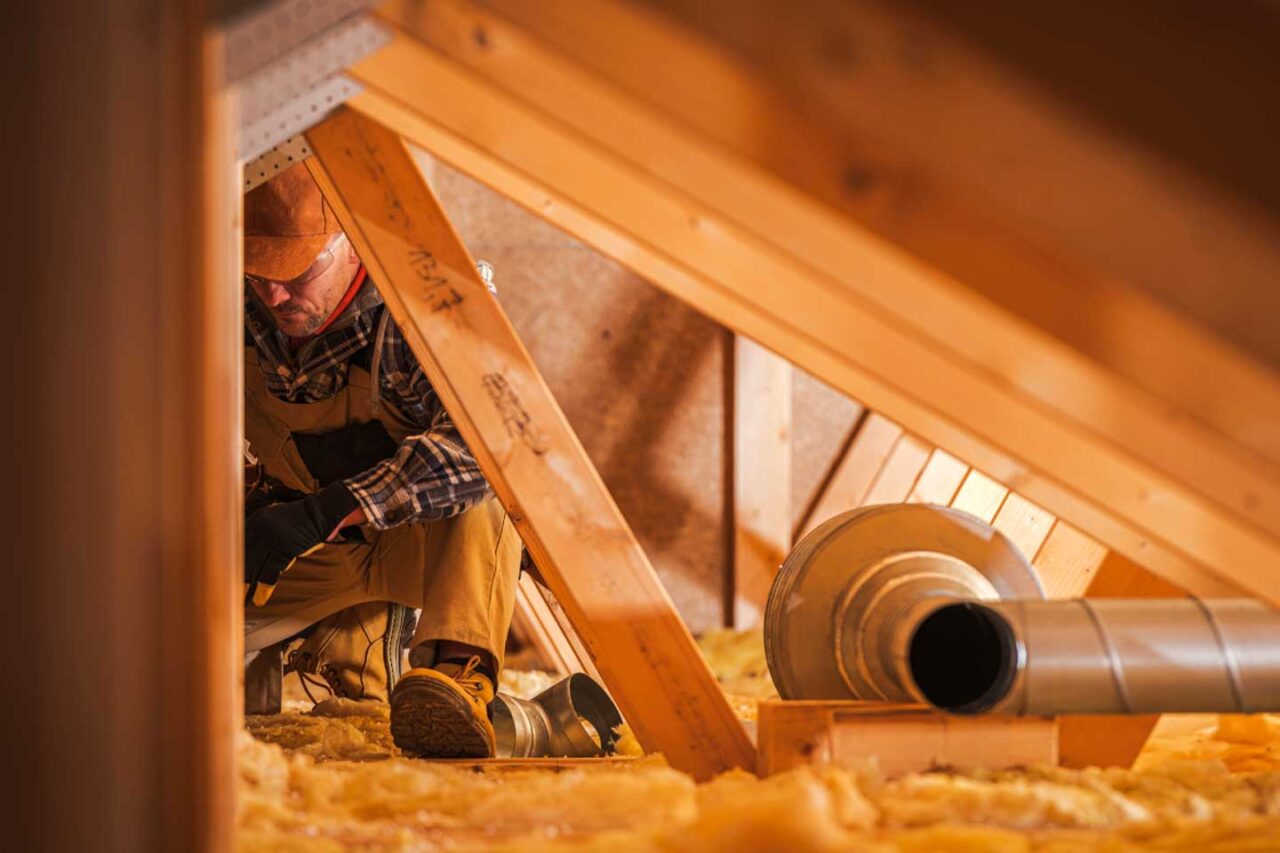
If your cooling bills feel higher than they should and some rooms never quite cool down, your attic is often the first place to look. Many Tallahassee homeowners assume their insulation is good enough, or that installing attic insulation is a simple DIY job. But in Tallahassee’s hot, humid climate, an under-insulated or poorly installed attic can drive up cooling bills, invite moisture and pest problems, and create safety hazards that quietly cost you money for years.
Our city falls in Climate Zone 2, a hot-humid zone. Installing attic insulation in Tallahassee means meeting Florida’s energy code with a minimum of R-38 attic insulation, choosing the right material, and pairing it with attic air sealing and moisture control. It is technically possible as a DIY project. But the heat, tight spaces, electrical hazards, and need for even coverage often make professional insulation installation the safer, more reliable choice for most homeowners.
Not sure how much insulation your attic has, or whether it meets today’s code? A professional evaluation can tell you exactly where you stand.
Why Attic Insulation is the First Place to Look in Your Tallahassee Home
Did you know heating and cooling make up the largest share of your home’s energy use? Up to 70% of the energy used in an average American home is spent on space conditioning. Adding attic insulation is the easiest and most cost-effective way to reduce it.
Insulation resists heat transfer, slowing the movement of heat from the outdoors into your home during summer, which lowers cooling costs and improves comfort.
In Tallahassee, the attic takes the worst of the summer heat load, making it the highest-return place to start. A home with low attic insulation levels and air leaks can easily run utility bills roughly 10% higher than a well-sealed, well-insulated home. That can add up fast.
What the Code Requires – R-Value for Climate Zone Two
How Much Attic Insulation Does Your Tallahassee Home Need?
Attic insulation R-value measures a material’s resistance to heat flow. The higher the R-value, the better the thermal performance. With Tallahassee in Florida Climate Zone 2 insulation territory (hot-humid), Florida’s energy code sets a minimum of R-38 attic insulation. ENERGY STAR recommends a similar minimum for the southern U.S., roughly 13 to 14 inches depending on the material.
Many older Tallahassee homes fall well short of the R-38 minimum. A simple check: if you can easily see your attic floor joists, you likely need more. Take note, the Florida energy code R-value is the floor, not the ceiling, on energy efficiency.
Choosing the Right Type of Attic Insulation for Tallahassee
Loose-fill (blown-in) insulation
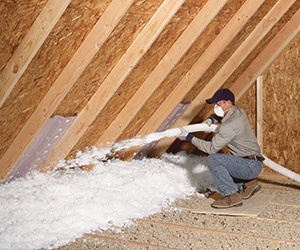 Blown-in (loose-fill) insulation is the most common choice for Tallahassee attics. The DOE notes loose-fill cellulose and fiberglass are typically installed by professionals who achieve the correct density and R-value, since uneven coverage quietly underperforms. Blown-in cellulose insulation offers effective moisture resistance, while blown-in fiberglass provides outstanding heat resistance and effectively fills gaps.
Batt Insulation
Batt insulation comes in flexible rolls, available faced or unfaced. Faced batts act as a vapor retarder, which matters in our humid climate, and can be layered to reach R-38.
Spray foam insulation
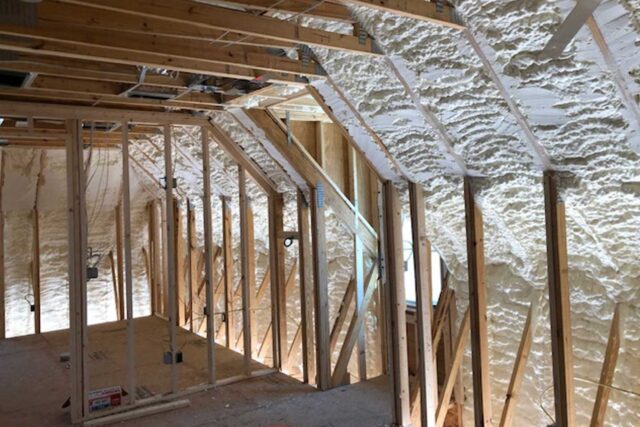
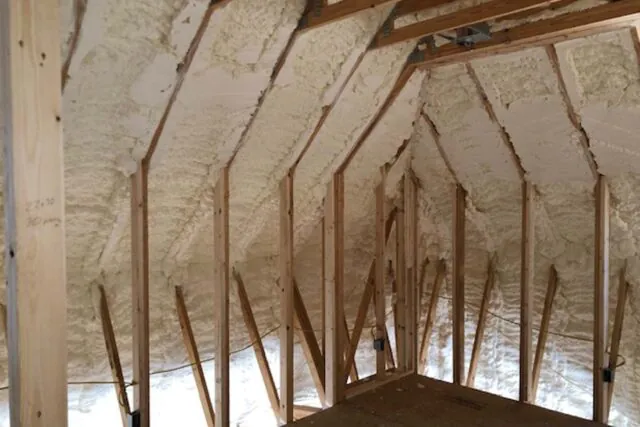
Spray foam insulation is a two-in-one option that insulates and air-seals in a single application. It must be professionally installed, as it often requires special equipment and certification.
Key Considerations Before Installing Attic Insulation in Tallahassee
Moisture Control
Attic moisture control comes first. Insulation installed over unaddressed leaks can trap moisture rather than solve the problem. Be sure to fix roof leaks and seal air leaks before insulating.
Ventilation
Proper attic ventilation lowers attic temperatures and manages moisture in vented attic spaces. Homes with an unvented or conditioned attic use a different insulation approach.
Pest prevention
Pest prevention is another reason to take air sealing seriously. Insulation and tight sealing close the gaps that insects and rodents use to enter, though rodents can damage some insulation materials if they get in.
Building code and permitting
Florida Building Code energy provisions govern attic insulation work, and significant upgrades may require permits. This often makes professional installation the preferred choice.
Safety
Safety matters too. Working in a Tallahassee attic in summer means extreme heat, tight quarters, and live electrical wiring, especially in older homes.
DIY vs Professional Installation
Is Installing Attic Insulation a DIY Job?
DIY attic insulation is possible with some materials, and the DOE acknowledges homeowners can install certain products. For Tallahassee attics, though, professional insulation installation usually wins. A trained crew ensures even coverage and correct density to hit R-38. They also handle inspection, air sealing first, and bring the right equipment for blown-in material. The DOE recommends getting written estimates, since installed prices for the same R-value can vary widely.
Explore how Florida attic insulation options compare before deciding.
Attic Insulation in Tallahassee — Frequently Asked Questions
Q: What R-value does attic insulation need in Tallahassee?
A: Tallahassee is in Climate Zone 2, and Florida’s energy code requires a minimum of R-38 for attic insulation. ENERGY STAR recommends the same for homes in the southern U.S.
Q: How do I know if my attic needs more insulation?
A: If the insulation is level with or below your attic floor joists, you likely need more. A professional inspection or home energy audit gives the most accurate answer.
Q: Can I install attic insulation myself?
A: Some materials can be DIY-installed, but extreme heat, electrical hazards, proper air sealing, and the need for even coverage to reach R-38 make professional installation the safer choice for most homeowners.
Q: What type of attic insulation is best for Tallahassee’s climate?
A: Blown-in loose-fill, either cellulose or fiberglass, is the most common choice. Spray foam adds air sealing in one step. The right pick depends on whether your attic is vented or conditioned.
Q: Does attic insulation help with humidity and mold?
A: Insulation paired with air sealing and proper ventilation helps reduce the moisture conditions that lead to mold and mildew, but roof and air leaks must be addressed first.
Ready to Get Your Attic Right? Start with a Free Estimate
The attic is the highest-return place to improve comfort and lower energy costs in your Tallahassee home. Hitting code level R-38, sealing air leaks, and managing moisture safely are what separate a good result from a wasted weekend. Installation quality, not just the material, determines the payoff.
Thinking about upgrading your attic? Allweather Insulation has insulated Tallahassee and North Florida homes since 1955. As the trusted attic insulation contractor Tallahassee homeowners count on, we offer free in-home estimates. Contact us today to schedule yours.
References
ENERGY STAR. “Adding Attic Insulation.” U.S. Environmental Protection Agency, www.energystar.gov/saveathome/seal_insulate/do-it-yourself-guide/adding-attic-insulation.
ENERGY STAR. “A DIY Guide to Sealing and Insulating with ENERGY STAR.” U.S. Environmental Protection Agency, www.energystar.gov/saveathome/seal_insulate/do-it-yourself-guide.
ENERGY STAR. “How to Check Your Home’s Attic Insulation Level.” U.S. Environmental Protection Agency, www.energystar.gov/products/ask-the-experts/how-check-your-homes-attic-insulation-level.
ENERGY STAR. “Recommended Home Insulation R-Values.” U.S. Environmental Protection Agency, www.energystar.gov/saveathome/seal_insulate/identify-problems-you-want-fix/diy-checks-inspections/insulation-r-values.
North American Insulation Manufacturers Association. “2023 Florida Building Code: Summary of Key Residential Energy Code Requirements.” NAIMA, https://insulationinstitute.org/wp-content/uploads/2025/05/N117-FL-Energy-Code-0425.pdf.
Pacific Northwest National Laboratory. “Blown Insulation for Existing Vented Attic.” Building America Solution Center, U.S. Department of Energy, basc.pnnl.gov/resource-guides/blown-insulation-existing-vented-attic.
Pacific Northwest National Laboratory. “Find My Climate Zone.” Building America Solution Center, U.S. Department of Energy, basc.pnnl.gov/building-assemblies/climate-zone-lookup.
University of Central Florida, Florida Solar Energy Center. “Attic Insulation and Ventilation.” FSEC Energy Research Center, https://energyresearch.ucf.edu/research/buildings-research/roof-assembly/attic-insulation-ventilation/.
University of Florida, Institute of Food and Agricultural Sciences. “Insulation.” Living Green, https://livinggreen.ifas.ufl.edu/topics/energy/insulation/.