When you’re building or remodeling a home, wall insulation often gets less attention than other parts of the project. It can feel straightforward: pick the R-value, fill the stud bays, and move on. But when comparing batts with JM Spider Plus Insulation, Tallahassee homeowners have another factor to consider — how completely the insulation fills the cavity once wiring, plumbing, bracing, and framing get in the way.
That expert installation can make a noticeable difference in a cooling-dominated climate. Gaps, voids, and compressed insulation can leave parts of the wall with less thermal protection, creating warm spots and rooms that are harder to keep evenly cool. When insulation loses contact with the surface it’s meant to insulate, those areas can become warmer or cooler than the surrounding wall and may create conditions that encourage condensation inside the cavity.
That’s where Spider Plus has an advantage. The fiberglass is blown directly into the open cavity using an interlocking fiber technology to fill around obstructions instead of requiring individual pieces to be cut and fitted. The benefit over batts is the potential for a more complete, uniform installation, not necessarily a higher R-value.
If you’re starting with fiberglass batts, this batt insulation guide explains how they work and where installation quality can make or break their performance. Before choosing between the two, it helps to understand what Spider Plus is and how it differs from conventional blown-in wall insulation.
What Is JM Spider Plus?
How the Product Works
JM Spider Plus insulation is a formaldehyde-free fiberglass insulation that is blown into open wall cavities and uses interlocking fiber technology. The fibers spring and lock together inside the cavity, filling gaps and voids without adhesive or netting.
The material is designed to retain its coverage without shrinking or settling after installation and can provide R-values up to R-25 in a 6-inch cavity. It is suitable for wood-frame, metal-frame, engineered-wood, and manufactured-home construction.
Spider Plus also has a flame spread index of 25 or less and a smoke-developed index of 50 or less. Because it is formaldehyde-free, the material will not off-gas formaldehyde into the indoor environment.
When choosing wall cavity insulation, Tallahassee homeowners should consider how well the material will fit around irregular framing and other obstructions.
How Spider Plus Differs From Blown-In Wall Insulation
Spider Plus is not the same thing as blown-in wall insulation. Conventional blown-in wall insulation is loose fiberglass packed behind plastic sheeting or netting that is stapled across the face of the studs. The installer cuts a slit in the sheeting, inserts a hose, and blows insulation behind it until the cavity is filled.
Spider Plus is a different product. It is blown directly into open stud bays, and its interlocking fibers hold the material in place without adhesive, sheeting, or netting. Eliminating that contaminant step can shorten the time between completing the framing and hanging the drywall.
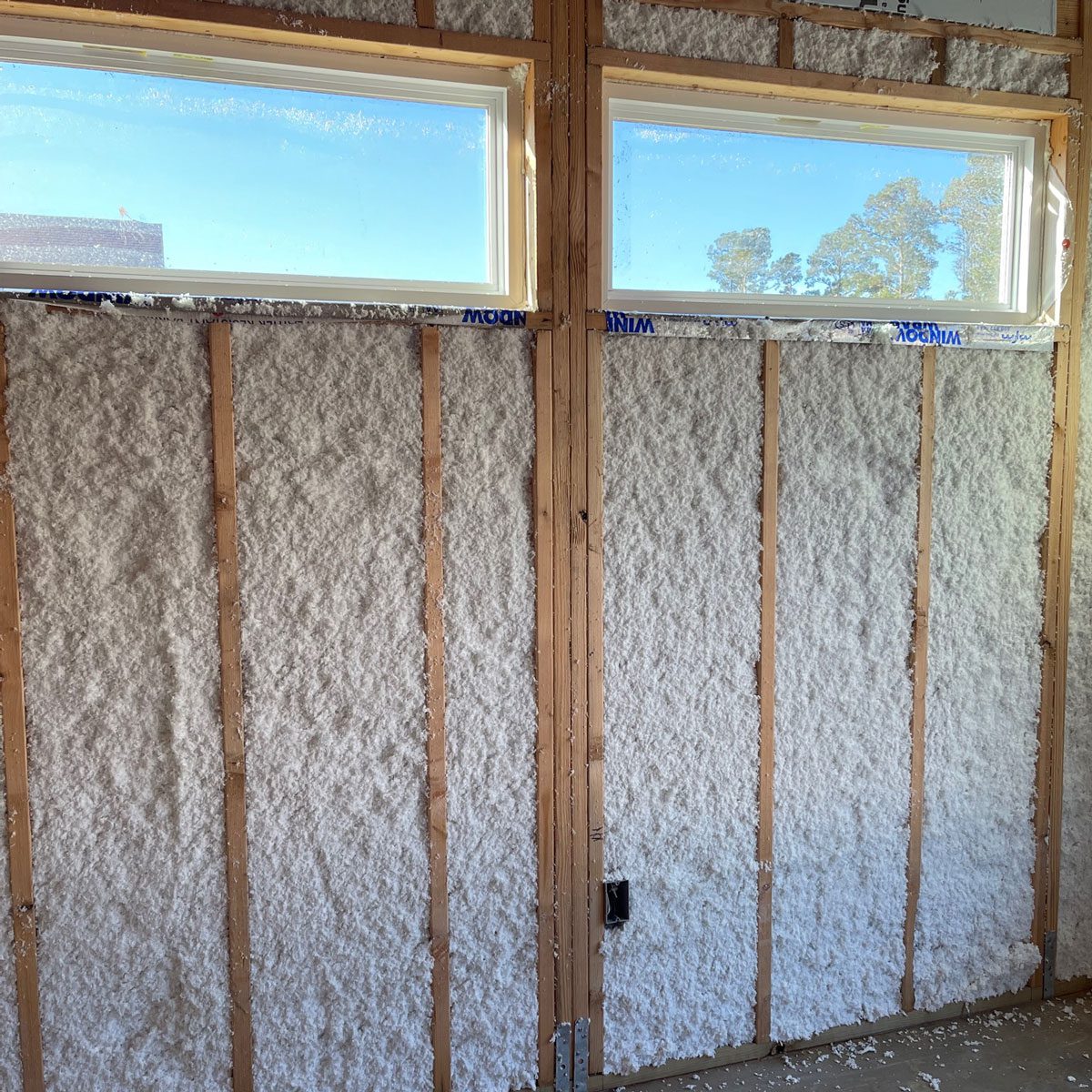
Spider Plus is specifically an open-cavity product. It is installed before drywall in new construction or during a remodel where the wall cavities have been opened. It is not used to insulate finished, closed walls.
Batts vs. JM Spider Plus in Tallahassee’s Climate Zone 2A
Our County’s Climate Classification
Leon County falls within Climate Zone 2A under the 2021 International Energy Conservation Code (IECC), a hot-humid climate classification. For homeowners, Climate Zone 2A wall insulation is especially important during the long cooling season, when exterior walls separate hot, humid outdoor air from air-conditioned rooms.
The classification should not be applied broadly to every project in North Florida or South Georgia. Climate zones are determined by county. In Georgia, for example, Thomas and Grady counties are in Zone 2, while Tift and Worth counties shifted from Zone 3 to Zone 2 under the 2021 IECC climate-zone designations.
Where Batts Lose Performance
Fiberglass batts can perform well when they are installed correctly. The challenge is that a wall cavity is rarely an empty rectangle.
Wires, pipes, blocking, and electrical boxes interrupt the stud bay. Batts must be carefully cut or split around these obstructions to avoid compression and gaps between the insulation and drywall.
The batts vs. Spider Plus Wins comparison comes down in part to workmanship. The R-value printed on the package assumes the material is installed as intended.
For a closer look at proper batt installation, see the batt insulation guide.
Where Blown-In Wins
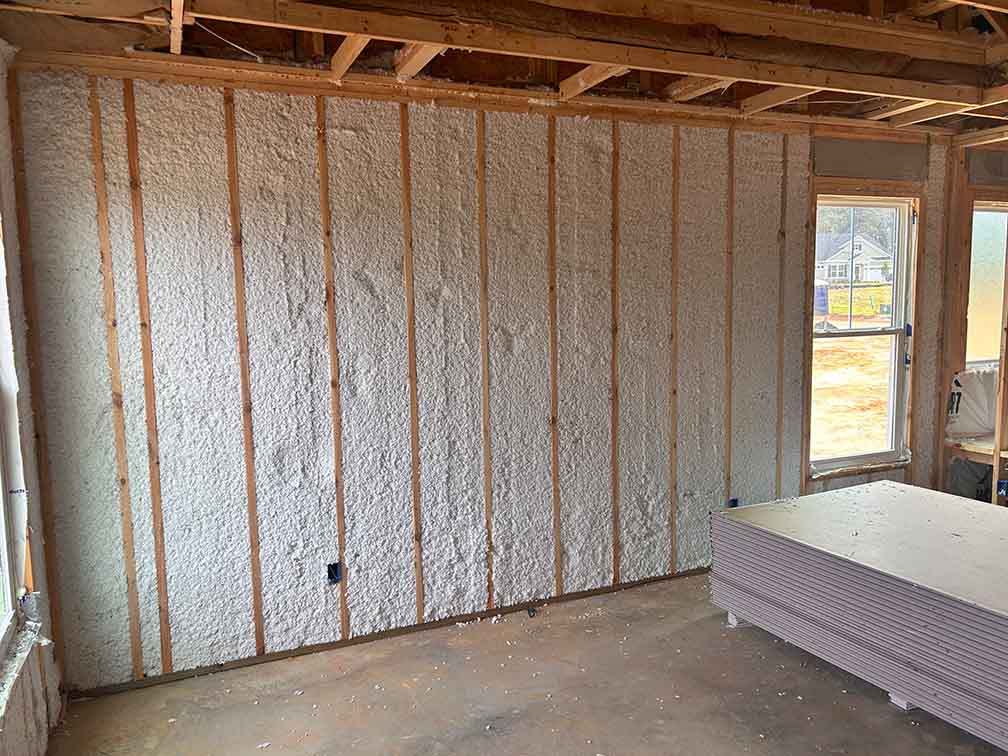
With Spider Plus wall insulation, the fibers fill around wiring, piping, and other obstructions instead of requiring the installer to cut around each one. That makes it easier to create a uniform layer throughout an irregular cavity.
The goal lines up with the standard for a RESNET Grade I installation: insulation should fill each cavity from side to side and top to bottom without substantial gaps or voids. Wall insulation should also be enclosed on all six sides of the cavity. During an inspection, visible exterior sheathing through gaps in the insulation indicates that the installation does not meet Grade I criteria.
The Humidity Connection
Over time, repeated condensation inside a wall can affect the durability of the materials around the insulation. A complete, uniform cavity fill helps limit uneven surface temperatures that contribute to condensation.
The glass fibers in Spider Plus are inorganic and resist rot, mildew, and deterioration. However, the surrounding wall materials still need protection from moisture. Proper air sealing and water management work alongside insulation to help control moisture inside the assembly.
When Spider Plus Makes Sense – and What to Use in Finished Walls
New Construction and Open-Wall Remodels
When planning new construction wall insulation, North Florida homeowners have the advantage of open stud bays. The same is true during a remodel where the drywall has been removed. Both are ideal applications for Spider Plus.
Open walls let the installer see the entire cavity while the material is being applied. That includes easy-to-miss areas above door headers, above and below windows, and around framing and mechanical penetrations.
If you’re planning a build, coordinating new home insulation before the drywall stage lets you address both insulation coverage and air sealing while the framing is still accessible.
Existing Walls and Drill-and-Fill
Finished walls are a different job.
For an existing home where the drywall will remain in place, drill and fill wall insulation typically uses dense-packed cellulose, although blown fiberglass designed for closed cavities is sometimes used. JM Spider Plus is not used for this application.
The installer makes small access holes near the top of each stud cavity from the interior or exterior and blows in the selected insulation to the manufacturer’s recommended density. If deteriorated batts are already inside the wall, they can block the new material from completely filling the cavity. The installer may need to remove them through a narrow opening near the floor or use an infrared camera to verify that the new insulation has filled around them.
For existing home insulation installed this way, a final infrared inspection helps verify that every cavity is filled before the access holes are patched.
Re-siding can also create a useful opportunity to work from the exterior. With the siding off, the installer can access wall cavities while making other air-barrier improvements. Any drainage plane disturbed during the work must be properly repaired or replaced before installing the new siding.
Pair With Air Sealing
Insulation slows heat transfer. Air sealing controls air movement. A wall performs best when you address both parts of the assembly.
Homeowners can save an average of about 15% on heating and cooling costs by combining home air sealing and insulation upgrades. This national estimate reflects improvements throughout an existing home, not the savings a homeowner can expect from insulating walls alone.
Frequently Asked Questions
Complete Cavity Fill Is the Real Goal
Whether you choose batts or Spider Plus, the decision ultimately comes back to the same thing: the wall cavity needs complete, uniform insulation.
That becomes even more important in Leon County’s hot-humid Zone 2 climate, where exterior walls spend much of the year separating hot outdoor conditions from cooled indoor space.
Planning a new build, remodel, or re-siding project? Ask your installer what R-value you can achieve in your wall cavities, how they’ll check for gaps around wiring and framing, and how they’ll coordinate insulation with air sealing.
Allweather Insulation can review your plans or walk through the project with you to determine whether Spider Plus, batts, or a closed-wall retrofit with cellulose or blown fiberglass is the right fit.
Call (850) 312-7361 or use the contact page to schedule a walkthrough or plan review.
References
Antonopoulos, Chrissi, et al. Guide to Determining Climate Zones by County: Building America and IECC 2021 Updates. PNNL-33270, Pacific Northwest National Laboratory, Sept. 2022, www.pnnl.gov/main/publications/external/technical_reports/PNNL-33270.pdf.
“Blown Insulation for Cavities of Existing Exterior Walls.” Building America Solution Center, U.S. Department of Energy and Pacific Northwest National Laboratory, basc.pnnl.gov/resource-guides/blown-insulation-cavities-existing-exterior-walls.
“Insulation Installation Achieves RESNET Grade 1.” Building America Solution Center, U.S. Department of Energy and Pacific Northwest National Laboratory, basc.pnnl.gov/resource-guides/insulation-installation-achieves-resnet-grade-1.
“Methodology for Estimated Energy Savings.” ENERGY STAR, U.S. Environmental Protection Agency, www.energystar.gov/saveathome/seal_insulate/methodology.
“Spider Plus Blow-In.” Johns Manville, www.jm.com/en/insulation-systems/building-insulation/spider-plus-blow-in/.