
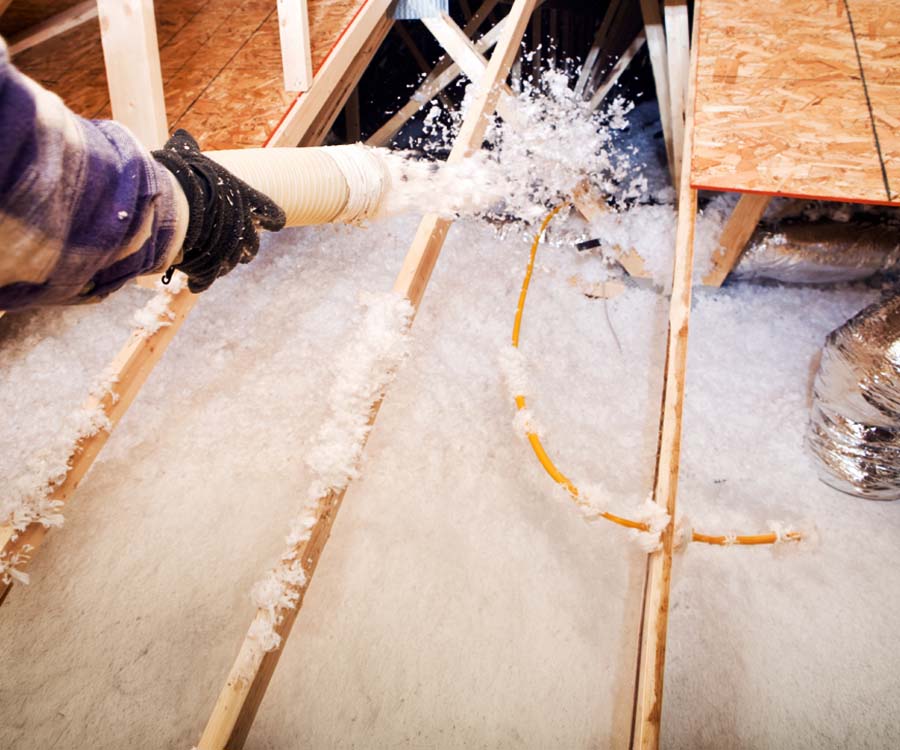
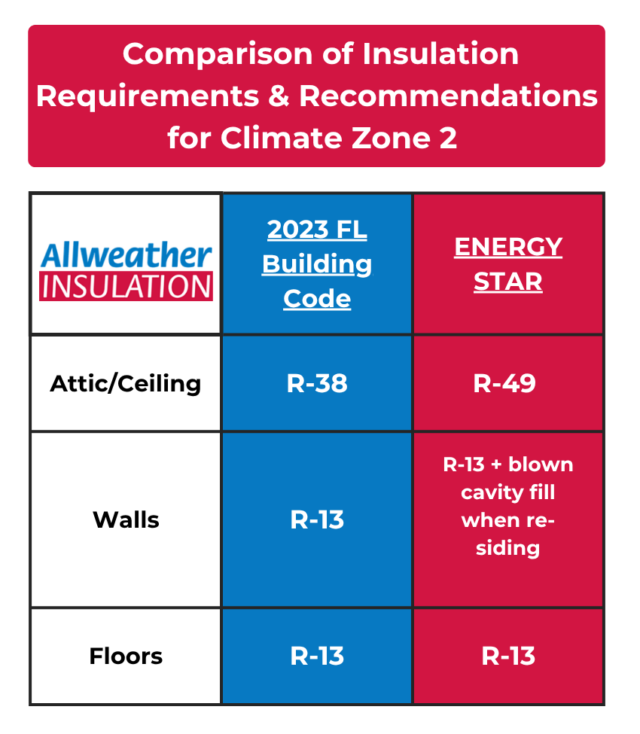
Many Tallahassee homeowners assume their attic insulation is fine as long as they have some “up there.” Yet for most local homes, that’s not always enough. Tallahassee and Leon County fall under IECC climate zone 2A for insulation. For this “hot-humid” climate zone, the 2023 Florida building code, based on the 2021 IECC (International Energy Conservation Code), requires a minimum level of R-38 of attic insulation in new homes.
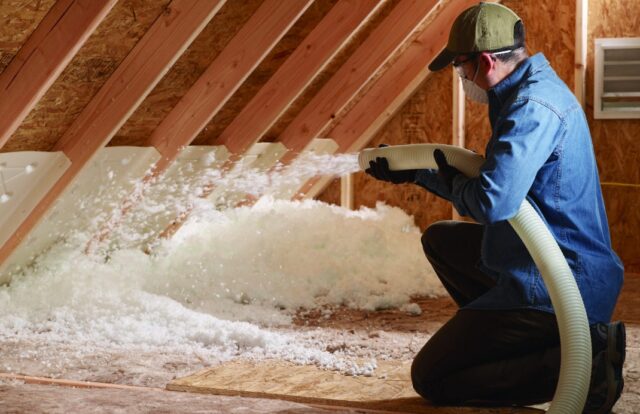 Yet the U.S. Government’s ENERGY STAR insulation recommendations for homes go even higher at R-49. That means plenty of homes in our community, both old and new, are insulated to the minimum (if at all), rather than to the level that delivers the best comfort and energy performance.
That gap matters here in the Sunshine State. Here in Florida, heating and cooling can account for more than 40% of home energy use, and older attic insulation can settle over time. So, if your attic is under-insulated, your AC may be working harder month after month just to keep up.
The good news is that blown-in fiberglass attic insulation can be a simple, smart fix that will save you money on your energy bills. Blown-in fiberglass insulation is one of the easiest ways to close that insulation gap, especially when it’s paired with air sealing that Tallahassee homes often need around attic openings, wiring, and duct penetrations. Not sure how much insulation is in your attic? A free estimate can help you find out where your home is losing energy.
Why Fiberglass Is the Go-To Insulation for Tallahassee Attics
How Fiberglass Insulation Works in Hot-Humid Climates
In summer, your attic can turn into a heat trap. Blown-in fiberglass insulation creates a thick blanket across the attic floor, slowing heat transfer from the roof into the rooms below. The higher the R-value, the better the insulation resists heat flow.
That matters here in Tallahassee, where our long cooling seasons put a lot of pressure on your HVAC system. In fact, up to 70% of your home’s energy use can go towards heating and cooling. Adding attic insulation is one of the easiest and most cost-effective first steps you can take to improve your home’s energy efficiency.
Why Fiberglass Over Other Options
For most open attics, blown-in fiberglass insulation is hard to beat. It’s a cost-effective insulation Tallahassee homeowners can add over existing material without a major tear-out. It’s also made largely from recycled glass, which makes it a practical option for a more efficient home. And when installed with air sealing, it can deliver strong performance without the higher price tag that often comes with spray foam. That’s a big reason so many homeowners choose it for an attic insulation upgrade that Florida homes can benefit from right away.
The R-Value Gap — Code Minimum vs. What You Actually Need
What Florida’s Building Code Requires
For homes in climate zone 2, which includes Tallahassee and every Florida county except Broward, Miami-Dade, and Monroe, the 2023 Florida Building Code, 8th Edition requires R-38 of attic/ceiling insulation in new homes. (There are certain conditions where this measure can be met with a level of only R-30 of insulation.) Floors over unconditioned spaces and wood-frame walls are generally required to have R-13. That’s the code baseline, but it’s still just the starting point.
What ENERGY STAR Recommends
For retrofitting existing homes in climate zone 2, ENERGY STAR recommends that uninsulated attics have R49 insulation or R-38 if your attic already has 3-4 inches of insulation. Floors and walls should have R-13 insulation.
For many uninsulated attics, that means installing to the recommended insulation level of R-49 is adding about 29% more insulation than the Florida code minimum.
Why This Gap Matters in Tallahassee
That extra insulation can lead to real home energy savings Tallahassee homeowners can feel on their utility bills. ENERGY STAR estimates homeowners can save an average of 15% on their heating and cooling costs from air sealing and insulation improvements. And the U.S. Department of Energy has even shown that upgrading attic insulation is among the top ten most cost-effective efficiency improvements for homes in the state of Florida. In a place where the cooling season seems to last forever, even modest savings can add up.
What to Expect from a Fiberglass Attic Insulation Upgrade
The Installation Process
A qualified contractor should first check your current insulation depth and condition, look for low spots or settling, and search for any air leaks. Then, for best results, it’s important to handle air sealing before adding new fiberglass. After that, the blown-in fiberglass insulation is machine-applied over any existing material to bring the attic closer to the target R-value without disturbing what’s already working.
Fiberglass vs. Other Insulation Types for Tallahassee Attics
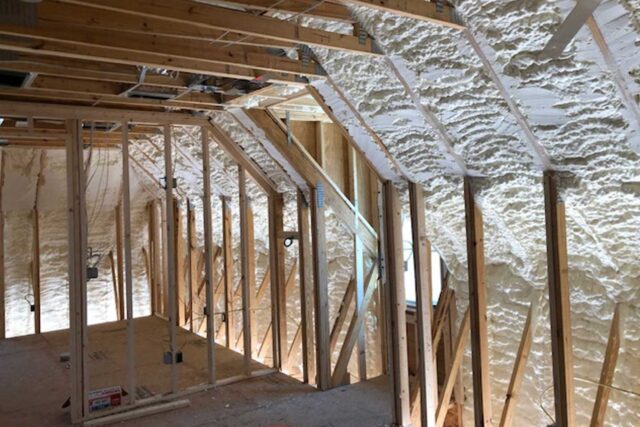 When comparing blown-in fiberglass vs spray foam insulation and other insulation types, the best answer often depends on the space. Fiberglass usually wins for open attic floors because it has the lowest upfront cost, installs fast, and is excellent at adding R-value over existing insulation. Blown-in cellulose insulation can perform well, too. It has a similar cost, a slightly higher R-value per inch, and good moisture-resistant properties.
Spray foam insulation offers insulation plus air sealing in one product, but it costs much more than fiberglass. It’s often a better fit for walls, rooflines, and hard-to-reach areas than open attic floors. Spray foam also requires removing old cellulose or fiberglass insulation before installation.
FAQs- A Recap
Q: What R-value does Florida’s building code require for attic insulation in Tallahassee?
A: The 2023 Florida Building Code requires R-38 for ceiling/attic insulation in new homes in Climate Zone 2. This includes Leon County and the Tallahassee metro area.
Q: What does ENERGY STAR recommend for Tallahassee attics?
A: ENERGY STAR recommends R-49 for uninsulated attics and R-38 for attics that already have 3–4 inches of existing insulation in Climate Zone 2.
Q: How much can I save by upgrading my attic insulation?
A: ENERGY STAR estimates homeowners can save an average of 15% on their heating and cooling costs by air sealing and upgrading insulation to recommended levels.
Q: Is blown-in fiberglass better than spray foam for attic insulation?
A: For open attic floors, blown-in fiberglass is typically the most cost-effective option because it can be installed quickly over existing insulation. Spray foam excels in spaces where both insulation and air sealing are needed in one application.
Q: How do I know if my current attic insulation is enough?
A: If your attic has less than roughly 12 to 14 inches of fiberglass, it’s likely below the required R-value of R-38 and could benefit from an upgrade. A free evaluation from a qualified contractor can confirm if you need more insulation.
Enjoy a More Comfortable Home with Fiberglass Insulation
For many Tallahassee homes, blown-in fiberglass attic insulation is the most cost-effective energy-efficiency upgrade. It helps close the gap between Florida’s code minimum of R-38 and ENERGY STAR’s recommended R-49. When paired with professional air sealing, blown-in fiberglass insulation quickly pays for itself through reduced energy bills and improved year-round comfort. If you’ve been thinking about an upgrade, now’s a good time to have your attic checked, see where you stand, and find out how much insulation your home really needs.
Contact Allweather Insulation today for a free estimate. Our experienced team of installation experts has been insulating Tallahassee homes since 1955 and is trusted by homeowners and builders throughout our community. We’re here to evaluate your current insulation, recommend the right R-value for your Tallahassee home, and install it right the first time.
References:
ENERGY STAR. “Methodology for Estimated Energy Savings from Sealing and Insulating.” U.S. Environmental Protection Agency, www.energystar.gov/saveathome/seal_insulate/methodology.
ENERGY STAR. “Recommended Home Insulation R–Values.” U.S. Environmental Protection Agency, www.energystar.gov/saveathome/seal_insulate/identify-problems-you-want-fix/diy-checks-inspections/insulation-r-values.
Florida Building Commission. “Residential 2023 FBC-EC vs. 2021 IECC Stringency Comparison.” Florida Solar Energy Center / University of Central Florida, 2024, www.floridabuilding.org/fbc/commission/FBC_0124/Commission/FSEC_Residential_2023_FBC-EC_vs_2021_IECC_Stringency_Comparison_Final.pdf.
Florida Solar Energy Center. “Performance Assessment of Photovoltaic Attic Ventilator Fans.” University of Central Florida, FSEC-GP-171-00, publications.energyresearch.ucf.edu/wp-content/uploads/2018/06/FSEC-GP-171-00.pdf.
Pacific Northwest National Laboratory. “Blown Insulation for Existing Vented Attic.” Building America Solution Center, U.S. Department of Energy, basc.pnnl.gov/resource-guides/blown-insulation-existing-vented-attic.
University of Florida / IFAS Extension. “Energy Efficient Homes: Air Conditioning.” EDIS, FCS3262/FY1026, https://edis.ifas.ufl.edu/publication/FY1026.
University of Florida / IFAS Extension. “Insulation – Living Green.” Living Green, https://livinggreen.ifas.ufl.edu/topics/energy/insulation/.
Wilson, E. J. H., et al. “Energy Efficiency Potential in the U.S. Single-Family Housing Stock.” NREL/TP-5500-68670, National Renewable Energy Laboratory, 2017, www.osti.gov/biblio/1414819.