
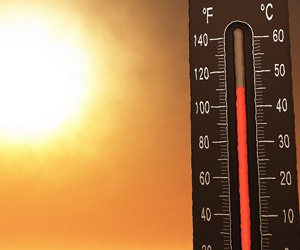
Most Tallahassee homeowners know their power bill climbs every summer along with the temperature, especially with their A/C running almost nonstop from May to September. Tallahassee and Leon County sit in IECC Climate Zone 2A, a Florida zone classified as hot-humid. That label matters. Heat pushes in from the hot roof and exterior walls all day while humid air works through every gap. A leaky, under-insulated home forces its cooling system to fight that alone, leading to higher bills, uneven temperatures, and condensation that can cause mold and wood rot.
This guide covers how insulation slows that heat transfer and air sealing helps deal with moisture. Plus, it also looks at which materials best fit each part of your Tallahassee home, and why the attic comes first.
How Insulation Works in Florida’s Heat and Humidity
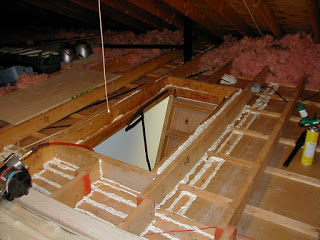 Heat moves from warmer areas toward cooler ones, so on a hot Tallahassee afternoon, it flows from your superheated roof and exterior walls toward the air-conditioned space inside. Insulation acts as a barrier that slows that movement, so your A/C doesn’t have to fight the full force of the heat. The U.S. Department of Energy notes that heating and cooling account for more energy use than any other system in your home, together accounting for over 50% of the average utility bill. Proper insulation helps bring those costs down.
But heat is only half the equation. When paired with air sealing, insulation helps keep humid outdoor air from pushing into your home. This reduces condensation and helps manage indoor moisture. In our hot-humid climate, insulation and air sealing help limit moisture as much as the temperature itself.
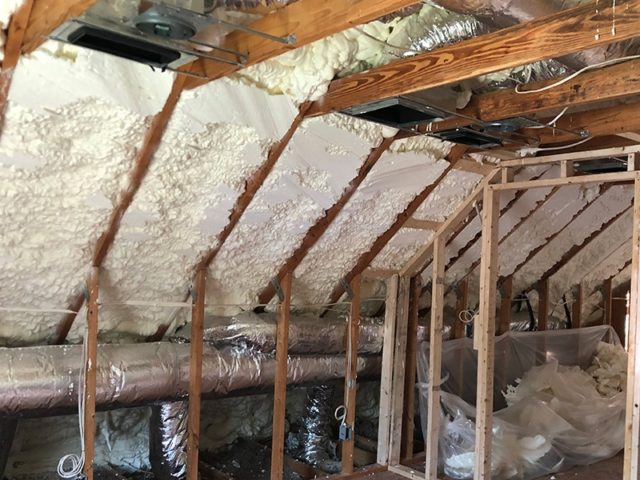
It’s also worth noting that a ventilated Florida attic can introduce additional moisture by allowing moist attic air to reach the living space. Sealing your attic to create an unvented attic helps reduce moisture around attic-mounted ducts and the ceiling.
Key Benefits of Insulating Your Tallahassee Home
Lower Cooling Costs
Energy bills climb fast whenever conditioned air escapes and heat seeps in during a cooling season that stretches across most of the year. Proper insulating and air sealing means your A/C runs less to hold the same temperature. For many homeowners hoping to reduce cooling costs that Florida summers tend to inflate, they will see this payoff fastest.
Year-Round Comfort
Good insulation and air sealing help your home hold a steady temperature room to room and smooth out the hot spots common in leakier homes. They also reduce stack effect that makes upstairs rooms hotter.
Moisture Control and Mold Mitigation
Together, insulation and air sealing help keep humid air outside and reduce indoor condensation. The kind of moisture control that insulation and air sealing provide helps support better indoor air quality, mitigate the conditions that allow mold and mildew to take hold, and protects your home from wood rot.
Reduced HVAC Strain
Florida’s air conditioners work harder and longer than units in cooler climates. Lightening that load with proper insulation reduces wear on your system and extends its service life. Many well-insulated new homes can even perform well with a smaller, right-sized unit.
Best Insulation Options for Tallahassee Homes
The right insulation material for your Florida home depends on where it is going. The Florida Building Code, Energy Conservation (8th Edition, 2023), sets a minimum R-38 insulation for attics in climate zone 2A, while ENERGY STAR recommends R-38 to R-49 for the strongest return.
Fiberglass (batts and blown-in)
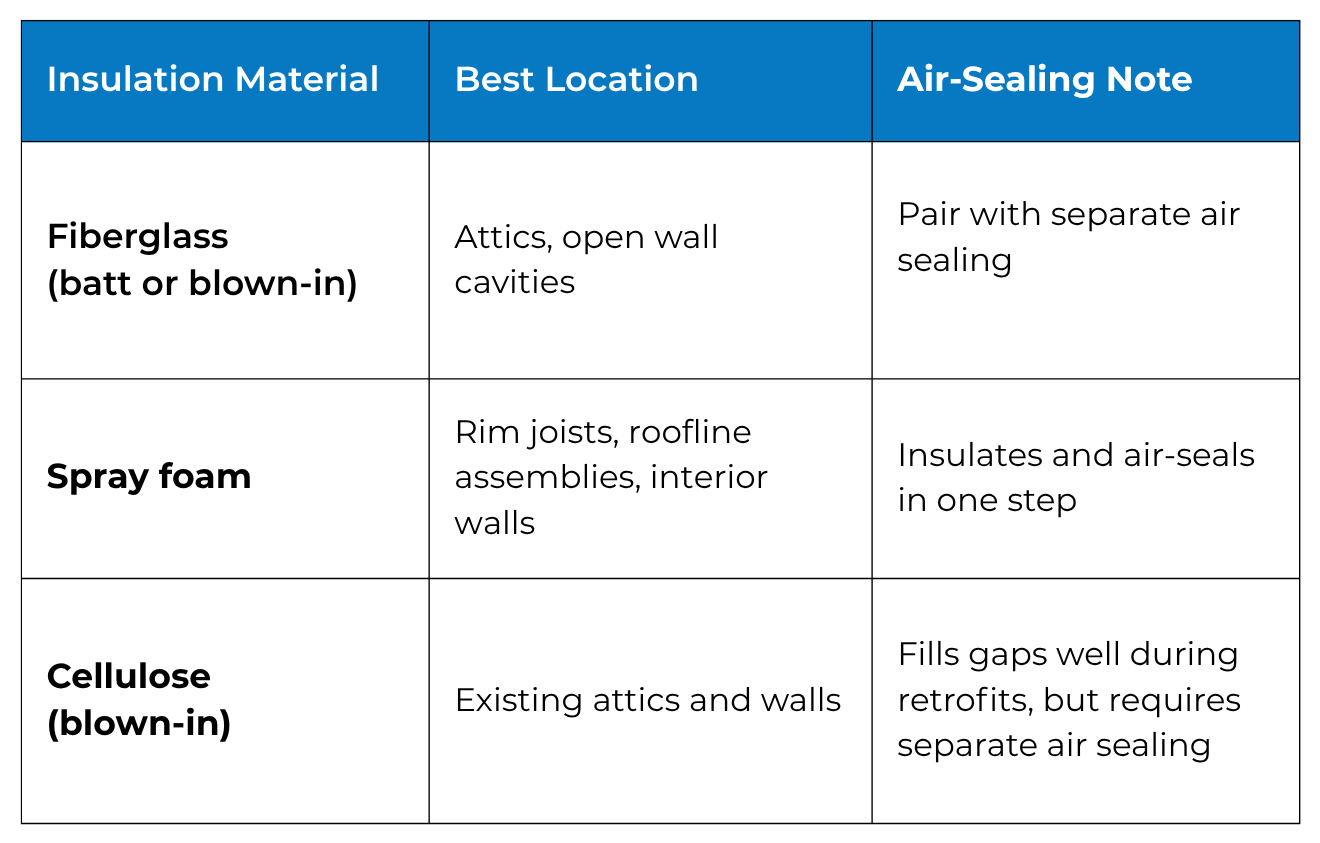
Fiberglass insulation is affordable, fire-resistant, and moisture-resistant. It is available as pre-cut batts for open cavities or loose-fill/blown-in for attics and dense-packed walls. It slows heat but doesn’t stop air on its own, so it needs to be paired with air sealing.
Spray Foam
Spray foam insulation is the only common insulation that air seals and insulates in one step. It is best for rim joists and hard-to-reach rooflines, and any spot where air sealing is the priority. Open-cell is less dense, while closed-cell offers a higher R-value per inch and added moisture resistance. Spray foam insulation helps Tallahassee homes stay comfortable year-round.
Cellulose
Cellulose insulation for Florida homes is made largely from recycled paper fiber, a dense material that excels at filling gaps. It’s also well-suited for upgrading older attics and walls without a full teardown. Cellulose is denser than fiberglass, but still needs air sealing to control air leaks.
Why the Attic is the Top Priority
As a homeowner, if you can only tackle one area, the attic is the place to start. Heat rises, and most air leaks are found at the attic plane. The attic also sees the most extreme temperatures of any space in summer, so air sealing and attic insulation Tallahassee homeowners invest in tends to deliver the biggest comfort and efficiency gain per dollar.
ENERGY STAR estimates homeowners can save an average of 15% on heating and cooling costs by air sealing and adding insulation in attics, floors over crawl spaces, and basements.
Frequently Asked Questions
What climate zone is Tallahassee in for insulation?
Tallahassee and Leon County are in IECC Climate Zone 2A, a hot-humid zone, which shapes recommended R-values and emphasizes combining insulation with air sealing and moisture control.
How much attic insulation does a Florida home need?
The 2023 Florida Building Code sets a minimum of R-38 for Climate Zone 2A, while ENERGY STAR recommends R-38 to R-49. Most older homes fall short, making an attic upgrade often the highest-value improvement.
What is the best insulation for a hot, humid Florida climate?
The best choice depends on location. Attics do well with blown-in fiberglass or cellulose, walls do well with fiberglass batts or dense-pack, and spray foam works best where air-sealing is the priority, such as rim joists and hard-to-reach roofline assemblies.
Does insulation help with humidity and mold in Florida?
Yes. Insulation paired with air sealing keeps humid air out and reduces condensation, helping control moisture and mitigate conditions that allow mold and mildew to develop.
How much can I save by improving my insulation?
ENERGY STAR estimates an average savings of about 15% on heating and cooling costs from sealing and insulating places like the attic, floors over crawl spaces, and basements.
The Bottom Line for Tallahassee Homeowners
The best insulation for your Florida home is the material best suited to each part of your house and to our hot-humid zone 2A climate. Getting it right starts with knowing the insulation R-value Florida code requires. It also means choosing materials built for the local mix of heat and humidity, whether for coastal Florida insulation projects facing salty, moist air or North Florida home insulation further inland.
Not sure if your insulation is doing its job? Allweather Insulation provides tailored insulation for Florida homes both old and new. Our family-owned and operated company has been serving Tallahassee insulation customers and the surrounding areas from North Florida to South Georgia since 1955. Contact us today for your free estimate. Call (850) 942-5557 or visit us online.
References
ENERGY STAR. “Methodology for Estimated Energy Savings from Sealing and Insulating.” U.S. Environmental Protection Agency, www.energystar.gov/saveathome/seal_insulate/methodology.
ENERGY STAR. “Recommended Home Insulation R–Values.” U.S. Environmental Protection Agency, www.energystar.gov/saveathome/seal_insulate/identify-problems-you-want-fix/diy-checks-inspections/insulation-r-values.
ENERGY STAR. “Rule Your Attic! For Comfort and Savings.” U.S. Environmental Protection Agency,
https://www.energystar.gov/saveathome/seal_insulate/rule_your_attic#:~:text=Making%20sure%20your,an%20insulation%20contractor.
ENERGY STAR. “Why Seal and Insulate?” U.S. Environmental Protection Agency, www.energystar.gov/saveathome/seal_insulate/why-seal-and-insulate.
Florida Solar Energy Center. “Attic Insulation and Ventilation.” University of Central Florida, https://energyresearch.ucf.edu/research/buildings-research/roof-assembly/attic-insulation-ventilation/
Florida Solar Energy Center. “How to Reduce Energy Costs in Existing Homes — Priorities.” University of Central Florida, https://energyresearch.ucf.edu/consumer/buildings/priorities/.
Pacific Northwest National Laboratory. “Find My Climate Zone.” Building America Solution Center, basc.pnnl.gov/building-assemblies/climate-zone-lookup.
UpCodes. “R402.1.2 Insulation and Fenestration Criteria.” 2023 FBC-Energy Conservation, 8th Edition,
https://up.codes/viewer/florida/fl-energy-conservation-code-2023/chapter/RE_4/re-residential-energy-efficiency#R402.1.2
U.S. Energy Information Administration. “Use of Energy in Homes.” Energy Explained, www.eia.gov/energyexplained/use-of-energy/homes.php.